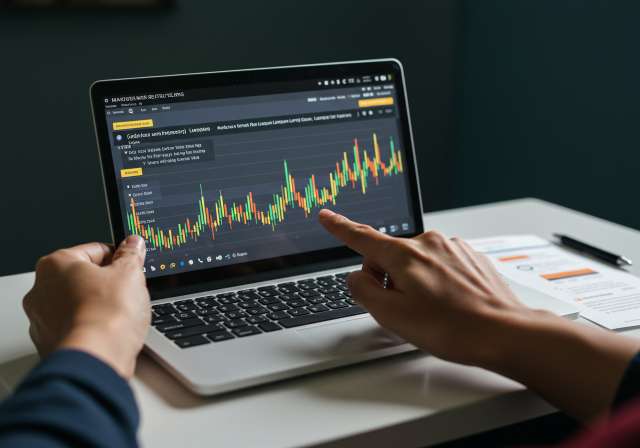
Tag: trading platform

  • Unlock Your Trading Potential: Is a Flat ₹15 Trade Right for You?

    Unlock Your Trading Potential: Is a Flat ₹15 Trade Right for You?

    Tired of high brokerage fees eating into your profits? Discover the rise of discount brokers and the benefits of a flat ₹15 per trade deal, empowering Indian

    Tired of high brokerage fees eating into your profits? Discover the rise of discount brokers and the benefits of a flat ₹15 per trade deal, empowering Indian investors to maximize returns on NSE & BSE.

    Unlock Your Trading Potential: Is a Flat ₹15 Trade Right for You?

    Introduction: The Evolving Landscape of Indian Stock Broking

    The Indian stock market has witnessed a dramatic transformation in recent years. Once dominated by traditional full-service brokers, the landscape is now fiercely competitive, with the emergence of discount brokers. These brokers have disrupted the status quo by offering significantly lower brokerage fees, often through a “flat fee” model. This article delves into the increasingly popular flat ₹15 per trade deal, examining its advantages, disadvantages, and whether it aligns with your investment style.

    Understanding the Traditional Brokerage Model

    Historically, Indian investors paid brokerage based on a percentage of their trading value. This percentage typically ranged from 0.1% to 0.5% for delivery-based trades and even higher for intraday trades. For active traders or those dealing with larger transaction sizes, these percentage-based fees could quickly accumulate, eating into potential profits. Let’s illustrate this with an example:

    • Scenario: Trading ₹1,00,000 worth of shares on the NSE.
    • Brokerage: Assuming a brokerage rate of 0.2%
    • Brokerage Cost: ₹1,00,000 0.2% = ₹200 per trade.
    • Total Cost (Buy & Sell): ₹200 (buy) + ₹200 (sell) = ₹400

    This example clearly demonstrates how brokerage fees can impact your returns, especially if you trade frequently.

    The Rise of Discount Brokers and Flat Fee Structures

    Discount brokers, empowered by technology and a focus on cost-efficiency, have revolutionized the Indian brokerage industry. They offer a simplified trading experience, typically without the advisory services provided by full-service brokers. Their key differentiator is their pricing model, often a flat fee per trade, irrespective of the trade value. This flat fee can range from ₹10 to ₹20, with ₹15 being a common offering.

    The Allure of the Flat ₹15 Per Trade Deal: Benefits and Advantages

    The flat ₹15 per trade deal has gained immense popularity among Indian investors, and for good reason. Here’s a breakdown of its key benefits:

    Cost-Effectiveness for High-Volume Traders

    For individuals who actively trade in the equity markets or engage in intraday trading, the flat fee structure can result in substantial cost savings. Consider the previous example, but with a flat ₹15 fee:

    • Scenario: Trading ₹1,00,000 worth of shares on the NSE.
    • Brokerage: Flat ₹15 per trade
    • Brokerage Cost: ₹15 per trade.
    • Total Cost (Buy & Sell): ₹15 (buy) + ₹15 (sell) = ₹30

    The difference is significant – ₹30 compared to ₹400! This translates to a substantial improvement in profitability, especially over time.

    Transparency and Predictability

    The flat fee structure offers greater transparency and predictability. You know exactly how much you’ll pay in brokerage, regardless of the trade value. This allows for better budgeting and financial planning. No more surprises when you receive your contract note.

    Accessibility for Small Investors

    The flat fee model makes stock trading more accessible to small investors who may not be able to afford the higher percentage-based brokerage fees charged by traditional brokers. It allows them to participate in the equity markets with lower initial costs.

    Focus on Self-Directed Investing

    Discount brokers often provide robust trading platforms and tools, empowering investors to make their own informed decisions. This caters to the growing trend of self-directed investing, where individuals prefer to manage their own portfolios.

    Potential Drawbacks of the Flat Fee Model

    While the flat ₹15 per trade deal offers numerous advantages, it’s essential to acknowledge its potential drawbacks:

    Lack of Advisory Services

    Discount brokers typically do not provide personalized investment advice or research reports. This means investors need to conduct their own due diligence and make investment decisions based on their own research and understanding of the market. This can be a disadvantage for novice investors who require guidance.

    Limited Customer Support

    Compared to full-service brokers, discount brokers may offer limited customer support. While they provide online resources and FAQs, getting personalized assistance may be more challenging. This can be frustrating if you encounter technical issues or have complex queries.

    Other Charges and Fees

    While the brokerage fee may be flat, investors should be aware of other charges, such as Securities Transaction Tax (STT), Goods and Services Tax (GST), exchange transaction charges, and SEBI turnover fees. These charges, although relatively small, can add up over time and impact your overall trading costs. It’s important to check the detailed fee structure provided by the broker.

    Suitability for Long-Term Investors

    While beneficial for active traders, the flat fee model may not be the most advantageous for long-term investors who buy and hold stocks. For infrequent trades with relatively high values, a percentage-based brokerage might be more cost-effective. For example, if you are investing a lump sum into ELSS funds for tax saving and plan to hold for the long term, the frequency of trades is low.

    Is a Flat ₹15 Trade Deal Right for You? Factors to Consider

    The suitability of a flat ₹15 per trade deal depends on your individual circumstances and investment style. Here are some factors to consider:

    Trading Frequency

    If you are an active trader who executes a large number of trades, a flat fee structure is likely to be more cost-effective than a percentage-based brokerage.

    Trade Size

    For larger trade sizes, the savings from a flat fee structure can be significant. However, for very small trades, the difference between a flat fee and a low percentage-based brokerage may be minimal.

    Investment Style

    If you prefer a self-directed approach to investing and are comfortable conducting your own research, a discount broker with a flat fee model may be a good fit. However, if you require personalized investment advice and guidance, a full-service broker may be more suitable.

    Customer Support Needs

    If you anticipate needing frequent customer support, consider whether the discount broker offers adequate channels and response times. If customer support is crucial for you, a full-service broker might be a better option.

    Investment Goals

    Your investment goals also play a crucial role. If you are primarily focused on short-term trading or intraday speculation, the flat fee model can help maximize your profits. However, if you are a long-term investor focusing on wealth creation through SIPs in mutual funds or investing in fundamentally strong companies, the brokerage cost may be less of a concern.

    Beyond Brokerage: Other Factors to Evaluate When Choosing a Broker

    While the brokerage fee is a significant factor, it’s not the only aspect to consider when selecting a broker. Here are other important factors to evaluate:

    Trading Platform

    The trading platform should be user-friendly, reliable, and equipped with the necessary tools for analysis and execution. Look for features such as real-time market data, charting tools, order placement options, and portfolio tracking.

    Research and Analysis Tools

    Even if you are a self-directed investor, access to research reports, market analysis, and stock screeners can be valuable. Some discount brokers offer these resources, while others rely on third-party providers.

    Account Opening Process

    The account opening process should be seamless and efficient. Look for brokers that offer online account opening with minimal paperwork and quick activation.

    Security and Reliability

    Ensure that the broker has robust security measures in place to protect your account and personal information. Also, check for the broker’s regulatory compliance and track record.

    Additional Services

    Some brokers offer additional services such as margin trading, options trading, and access to IPOs. Consider whether these services are relevant to your investment needs.

    Conclusion: Making an Informed Decision

    The flat ₹15 per trade deal has undoubtedly transformed the Indian brokerage industry, offering cost-effective trading solutions for a wide range of investors. However, it’s crucial to carefully evaluate your individual needs and circumstances before making a decision. Consider your trading frequency, trade size, investment style, and customer support requirements. By weighing the advantages and disadvantages of the flat fee model and considering other important factors, you can choose a broker that aligns with your investment goals and helps you achieve financial success in the Indian equity markets. Remember to always do your own research and consult with a financial advisor if needed.

  • Mastering Option Analytics for Smarter Trading in India

    Mastering Option Analytics for Smarter Trading in India

    Unlock the power of informed trading! Learn how option analytics can transform your trading strategy in the Indian stock market. Demystify Greeks, volatility, a

    Unlock the power of informed trading! Learn how option analytics can transform your trading strategy in the Indian stock market. Demystify Greeks, volatility, and profit potential.

    Mastering Option Analytics for Smarter Trading in India

    Introduction: Navigating the Options Market with Confidence

    The Indian equity derivatives market, traded primarily on the NSE (National Stock Exchange), offers a powerful tool for investors: options. But unlike straightforward equity investments, options trading involves a complex interplay of factors that can seem daunting at first. Understanding these factors and utilizing the right tools can significantly improve your chances of success. This is where a deep dive into option analytics becomes crucial.

    Many Indian investors, particularly those familiar with the BSE (Bombay Stock Exchange) and long-term investments like mutual funds, SIPs (Systematic Investment Plans), and even tax-saving instruments such as ELSS (Equity Linked Savings Schemes), PPF (Public Provident Fund), and NPS (National Pension System), find options trading a different beast altogether. It requires a more active and nuanced approach.

    The goal of this article is to demystify option analytics and provide Indian investors with a practical understanding of how to use it to make more informed trading decisions. We will cover key concepts, tools, and strategies tailored for the Indian market, helping you navigate the world of options with greater confidence and potential profitability.

    Understanding the Fundamentals of Options

    Before diving into the analytical aspects, let’s recap the basics. An option is a contract that gives the buyer the right, but not the obligation, to buy (call option) or sell (put option) an underlying asset (like a stock or index) at a specified price (the strike price) on or before a specified date (the expiration date). For this right, the buyer pays a premium to the seller.

    • Call Option: Gives the buyer the right to BUY the underlying asset. Profitable if the price of the asset rises above the strike price plus the premium paid.
    • Put Option: Gives the buyer the right to SELL the underlying asset. Profitable if the price of the asset falls below the strike price minus the premium paid.
    • Strike Price: The price at which the underlying asset can be bought or sold if the option is exercised.
    • Expiration Date: The last date on which the option can be exercised.
    • Premium: The price paid by the buyer to the seller for the option contract.

    Unlike equity investments, options have an expiration date. This time decay factor, known as Theta, is a critical aspect to consider when analyzing options.

    The Importance of Option Analytics

    Why is option analytics so important? Because it provides the tools to understand and quantify the various risks and rewards associated with options trading. Without it, you’re essentially gambling, hoping for the best without truly understanding the potential outcomes. In the Indian market, where volatility can be high and news events can significantly impact stock prices, relying on intuition alone is a recipe for disaster. Effective option analytics empowers you to:

    • Assess Risk: Understand the potential losses associated with a particular option strategy.
    • Evaluate Potential Profit: Estimate the potential gains based on different market scenarios.
    • Manage Positions: Adjust your positions based on changing market conditions and your risk tolerance.
    • Choose the Right Strategy: Select the appropriate option strategy based on your market outlook and investment goals.
    • Understand the Greeks: Gain insight into how various factors affect the option price.

    Key Concepts in Option Analytics: The Greeks

    The “Greeks” are a set of measurements that quantify the sensitivity of an option’s price to various factors. Understanding the Greeks is fundamental to effective option analytics.

    Delta (Δ):

    Delta measures the sensitivity of the option’s price to a change in the price of the underlying asset. It represents the change in the option premium for every ₹1 change in the price of the underlying asset. For example:

    • A call option with a Delta of 0.6 will increase in value by approximately ₹0.6 for every ₹1 increase in the price of the underlying asset.
    • A put option with a Delta of -0.4 will decrease in value by approximately ₹0.4 for every ₹1 increase in the price of the underlying asset.

    Delta can also be interpreted as the probability of the option expiring in the money (ITM).

    Gamma (Γ):

    Gamma measures the rate of change of Delta with respect to a change in the price of the underlying asset. It indicates how much the Delta of an option is expected to change for every ₹1 change in the price of the underlying asset. Higher Gamma implies a more dynamic Delta, making the option price more sensitive to changes in the underlying asset price.

    Options that are at-the-money (ATM) typically have the highest Gamma.

    Theta (Θ):

    Theta measures the rate of decay in the option’s price over time. It represents the amount the option’s premium will decrease each day, assuming all other factors remain constant. Theta is always negative for option buyers (as time decay works against them) and positive for option sellers (as time decay works in their favor).

    Theta is most pronounced as the option approaches its expiration date.

    Vega (ν):

    Vega measures the sensitivity of the option’s price to a change in implied volatility. Implied volatility reflects the market’s expectation of future volatility in the underlying asset. An increase in implied volatility will increase the value of both call and put options, and a decrease in implied volatility will decrease their value. Vega is particularly important for options strategies that are sensitive to changes in volatility, such as straddles and strangles.

    Rho (ρ):

    Rho measures the sensitivity of the option’s price to changes in interest rates. While interest rates do impact option prices, this Greek is generally less important than the others, particularly in the short-term and for options on highly volatile assets like stocks.

    Implied Volatility (IV) and Its Role

    Implied volatility (IV) is a crucial concept in options trading. It represents the market’s expectation of the future volatility of the underlying asset. Unlike historical volatility, which is based on past price movements, IV is forward-looking and derived from option prices. Higher IV generally indicates a greater expectation of price swings, leading to higher option premiums.

    Option analytics often involves analyzing IV to determine whether options are overpriced or underpriced. Comparing IV to historical volatility can help traders identify potential opportunities.

    For Indian investors, keeping an eye on the India VIX, which measures the market’s expectation of volatility over the next 30 days, is crucial. A high India VIX often signals heightened market uncertainty and potentially larger price fluctuations.

    Tools and Resources for Option Analytics in India

    Several tools and resources are available to Indian investors to assist with option analytics:

    • Online Brokers: Most Indian brokers offer option chains with real-time pricing and Greeks. Many also provide option strategy builders and payoff calculators.
    • Financial Websites: Websites like NSE India, BSE India, and others provide option chain data and market information.
    • Trading Platforms: Dedicated trading platforms often offer advanced charting tools, analytics features, and backtesting capabilities.
    • Software and Apps: Several software programs and mobile apps are specifically designed for option analytics, providing sophisticated tools for analysis and strategy development.
    • Educational Resources: SEBI (Securities and Exchange Board of India) and various brokers offer educational resources on options trading, including webinars, articles, and courses.

    Developing an Options Trading Strategy Using Option Analytics

    Here’s how you can use option analytics to develop a robust options trading strategy:

    1. Define Your Market Outlook: Are you bullish, bearish, or neutral on the underlying asset?
    2. Determine Your Risk Tolerance: How much are you willing to lose on a single trade?
    3. Select an Appropriate Strategy: Choose an option strategy that aligns with your market outlook and risk tolerance. Examples include:
      • Covered Call: Bullish strategy, selling a call option on a stock you already own.
      • Protective Put: Bearish strategy, buying a put option to protect against downside risk in a stock you own.
      • Straddle: Neutral strategy, buying both a call and a put option with the same strike price and expiration date.
      • Strangle: Neutral strategy, buying both a call and a put option with different strike prices but the same expiration date.
    4. Analyze the Option Chain: Use option chain data to identify potential trading opportunities, considering factors like strike price, expiration date, implied volatility, and the Greeks.
    5. Assess the Greeks: Analyze the Greeks to understand the potential impact of changes in the underlying asset price, time decay, and implied volatility.
    6. Manage Your Position: Continuously monitor your position and adjust it as needed based on changing market conditions.

    Risk Management and Considerations

    Options trading involves significant risk, and it’s crucial to implement effective risk management strategies:

    • Define Your Risk Tolerance: Determine the maximum amount you are willing to lose on any single trade.
    • Use Stop-Loss Orders: Place stop-loss orders to automatically exit a trade if it moves against you.
    • Diversify Your Portfolio: Don’t put all your eggs in one basket. Spread your investments across different asset classes and strategies.
    • Start Small: Begin with small positions and gradually increase your exposure as you gain experience.
    • Stay Informed: Keep up-to-date with market news and events that could impact your positions.

    Remember, options trading is not a get-rich-quick scheme. It requires knowledge, discipline, and a well-defined strategy. Consult with a financial advisor before making any investment decisions.

    Conclusion: Empowering Your Trading with Knowledge

    Understanding and utilizing option analytics is paramount for success in the Indian options market. By mastering the Greeks, analyzing implied volatility, and developing a robust trading strategy, you can significantly improve your chances of making informed and profitable trading decisions. Remember to prioritize risk management and continuously learn and adapt to the ever-changing market dynamics. The journey to becoming a successful options trader requires dedication and continuous learning. By embracing option analytics, you can unlock the potential of the derivatives market and enhance your overall investment portfolio.

  • Intraday Trading in India: A Comprehensive Guide

    Intraday Trading in India: A Comprehensive Guide

    Demystifying Intraday Trading: Learn how to navigate the Indian stock market with this comprehensive guide. Discover strategies, risks, and tips for successful intraday trading.

    Intraday Trading in India: A Comprehensive Guide

    What is Intraday Trading?

    Intraday trading, also known as day trading, involves buying and selling financial instruments, such as stocks, currencies, or commodities, within the same trading day. The objective is to profit from small price fluctuations that occur during the day. Unlike long-term investing, intraday traders don’t hold positions overnight, aiming to close all their trades before the market closes.

    In India, intraday trading is popular among retail investors looking for quick gains in the equity markets. The NSE (National Stock Exchange) and BSE (Bombay Stock Exchange) provide platforms for traders to execute their strategies.

    Key Characteristics of Intraday Trading

    • Short-Term Focus: Intraday traders are concerned with price movements within a single day, not long-term growth prospects.
    • High Leverage: Margin trading is common, allowing traders to control larger positions with a smaller capital outlay. This magnifies both profits and losses.
    • Technical Analysis: Reliance on charts, indicators, and other technical tools to identify trading opportunities.
    • Fast-Paced Environment: Requires quick decision-making and execution skills due to rapid price fluctuations.
    • Discipline: Strict adherence to trading plans and risk management rules is crucial.

    Getting Started with Intraday Trading in India

    Before venturing into the world of intraday trading, it’s essential to understand the basics and take necessary precautions.

    1. Open a Demat and Trading Account

    The first step is to open a Demat (Dematerialized) account and a trading account with a SEBI-registered broker. The Demat account holds your shares in electronic form, while the trading account allows you to buy and sell securities on the stock exchanges. Popular brokers in India include Zerodha, Upstox, Angel One, and ICICI Direct.

    2. Understand the Market Mechanics

    Familiarize yourself with how the Indian stock market works. Learn about order types (market orders, limit orders, stop-loss orders), trading hours, settlement cycles, and other essential market terminologies. Knowledge of Nifty 50 and Sensex movements is also crucial.

    3. Choose the Right Stocks

    Selecting the right stocks is crucial for success. Look for stocks that are highly liquid (easily bought and sold) and exhibit significant price volatility. Some popular stocks for day trading include those from sectors like banking, IT, and pharmaceuticals. Analyzing historical price data and news events can help in identifying potential trading candidates.

    4. Develop a Trading Strategy

    A well-defined trading strategy is the backbone of successful intraday trading. This involves identifying entry and exit points, setting profit targets, and establishing stop-loss levels. Common strategies include:

    • Trend Following: Identifying and capitalizing on existing market trends.
    • Breakout Trading: Buying or selling when a stock’s price breaks through a significant resistance or support level.
    • Reversal Trading: Identifying and trading on price reversals.
    • Scalping: Making small profits from tiny price changes.

    5. Risk Management

    Risk management is paramount in intraday trading, given its inherent volatility. Here are some essential risk management techniques:

    • Stop-Loss Orders: Using stop-loss orders to limit potential losses on each trade.
    • Position Sizing: Determining the appropriate amount of capital to allocate to each trade based on your risk tolerance.
    • Diversification: Spreading your risk by trading multiple stocks instead of concentrating on a single one.
    • Avoid Overtrading: Sticking to your trading plan and avoiding impulsive decisions.

    6. Use Technical Analysis

    Technical analysis is the primary tool used by intraday traders to make trading decisions. This involves studying price charts, identifying patterns, and using technical indicators to predict future price movements. Some popular indicators include:

    • Moving Averages: Used to identify trends and potential support/resistance levels.
    • Relative Strength Index (RSI): Used to measure the momentum of a stock.
    • Moving Average Convergence Divergence (MACD): Used to identify potential buy and sell signals.
    • Bollinger Bands: Used to measure price volatility.
    • Fibonacci Retracement: Used to identify potential support and resistance levels based on Fibonacci ratios.

    7. Stay Updated with Market News

    Staying informed about market news and events is crucial for intraday traders. Keep track of economic data releases, company announcements, and global events that could impact the stock market. Business news channels and financial websites are valuable resources.

    8. Practice with Paper Trading

    Before risking real money, practice your trading strategies using a paper trading account. This allows you to simulate trading in a real market environment without the risk of financial loss. Most brokers offer paper trading accounts to their clients.

    Risks Associated with Intraday Trading

    While the potential for high returns attracts many to intraday trading, it’s important to be aware of the significant risks involved:

    • High Volatility: The stock market can be highly volatile, and intraday traders are exposed to rapid price fluctuations.
    • Leverage Risk: Leverage can magnify both profits and losses, potentially leading to significant financial losses.
    • Emotional Trading: Fear and greed can cloud judgment and lead to impulsive trading decisions.
    • Transaction Costs: Frequent trading can result in high brokerage fees and taxes, which can eat into profits.
    • Time Commitment: Intraday trading requires constant monitoring of the market and can be time-consuming.

    Intraday Trading vs. Long-Term Investing

    Intraday trading differs significantly from long-term investing. Here’s a comparison:

    Feature Intraday Trading Long-Term Investing
    Holding Period A few hours or less Months, years, or even decades
    Profit Source Small price fluctuations Capital appreciation and dividends
    Risk Level High Moderate to Low
    Analysis Technical analysis Fundamental analysis
    Time Commitment High Low
    Tax Implications Speculative Income (taxed at applicable slab rates) Capital Gains Tax (depending on holding period)

    Tax Implications of Intraday Trading in India

    Profits from intraday trading are considered speculative income and are taxed at the individual’s income tax slab rate. Losses from intraday trading can be set off against other speculative income. It’s essential to maintain accurate records of all trades for tax purposes.

    Tips for Successful Intraday Trading

    Here are some tips to improve your chances of success in intraday trading:

    • Start Small: Begin with a small amount of capital and gradually increase your position size as you gain experience.
    • Set Realistic Goals: Don’t expect to get rich overnight. Set achievable profit targets and stick to your trading plan.
    • Control Your Emotions: Avoid making impulsive decisions based on fear or greed.
    • Stay Disciplined: Follow your trading plan and risk management rules consistently.
    • Learn Continuously: Stay updated with market news, refine your trading strategies, and learn from your mistakes.
    • Use Technology Wisely: Utilize trading platforms and tools effectively to analyze data and execute trades efficiently.

    The Role of Demat Accounts and Online Trading Platforms

    Demat accounts and online trading platforms have revolutionized access to the Indian stock market. They allow investors to buy and sell shares electronically, making the entire trading process faster, more efficient, and more transparent. Brokers like Zerodha and Upstox offer user-friendly platforms with advanced charting tools and real-time market data, empowering traders to make informed decisions. Features such as SIPs (Systematic Investment Plans) and tools for analyzing mutual funds are typically not directly relevant to short-term intraday trades, which focus on leveraging daily price movements. The use of such platforms has significantly increased the participation of retail investors in the equity markets, making opportunities in intraday trading more accessible than ever before.

    Conclusion

    Intraday trading can be a potentially lucrative but also risky activity. It requires knowledge, skill, discipline, and a strong understanding of risk management. By following the guidelines outlined in this article and continuously learning and adapting to the market, you can increase your chances of success in the world of day trading in the Indian stock market. Remember to approach intraday trading with caution and always prioritize protecting your capital.

    intraday trading