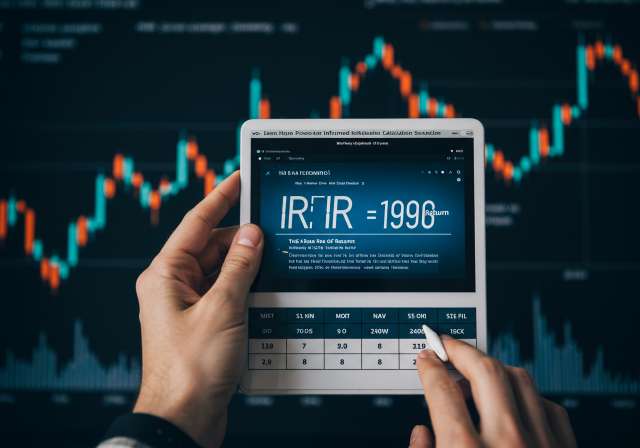
Unlock profits with the best technical analysis tools in trading apps. Navigate the Indian stock market (NSE & BSE) like a pro. Spot trends, predict prices, and
Level Up Your Trading: Mastering Technical Analysis Tools in Trading Apps
Unlock profits with the best technical analysis tools in trading apps. Navigate the Indian stock market (NSE & BSE) like a pro. Spot trends, predict prices, and maximize returns! Learn now.
The Indian stock market, with its bustling exchanges like the NSE (National Stock Exchange) and BSE (Bombay Stock Exchange), offers a plethora of opportunities for savvy investors. However, successfully navigating this complex landscape requires more than just gut feeling. It demands a strategic approach, powered by data and insightful analysis. That’s where technical analysis comes in, providing traders with the tools they need to understand price movements, identify trends, and make informed trading decisions.
Gone are the days of relying solely on brokers and hearsay. Today, a wealth of trading apps are available, putting the power of technical analysis right at your fingertips. These apps are especially relevant for retail investors in India, who are increasingly participating in the equity markets through SIPs (Systematic Investment Plans), mutual funds, and direct equity investments. With the right tools and knowledge, even novice investors can unlock the potential of the market.
Technical analysis is the art and science of predicting future price movements based on past price data and trading volume. It revolves around the idea that history tends to repeat itself, and patterns observed in the past can provide valuable insights into potential future trends. Unlike fundamental analysis, which focuses on a company’s financial health and intrinsic value, technical analysis primarily analyzes price charts and technical indicators.
In the Indian context, technical analysis is particularly useful for short to medium-term trading strategies. It allows traders to capitalize on short-term price fluctuations and identify optimal entry and exit points. For example, a trader might use moving averages to identify a potential uptrend in a specific stock listed on the NSE and decide to enter a long position. Conversely, they might use RSI (Relative Strength Index) to identify overbought conditions and consider selling their holdings.
Trading apps are increasingly sophisticated, offering a wide array of technical analysis tools to empower investors. Here’s a look at some of the most important ones:
Candlestick charts are a fundamental tool for any technical analyst. Each candlestick represents the price movement of an asset over a specific period (e.g., a day, a week, or an hour). The body of the candlestick shows the opening and closing prices, while the wicks (or shadows) indicate the high and low prices during that period. Different candlestick patterns, such as Doji, Hammer, and Engulfing patterns, can provide valuable signals about potential trend reversals.
For Indian traders, recognizing candlestick patterns on charts of companies listed on the BSE can help them anticipate potential price changes. For instance, a bullish engulfing pattern appearing after a downtrend might signal a potential buying opportunity.
Moving averages are calculated by averaging the price of an asset over a specific period. They help to smooth out price fluctuations and identify the underlying trend. Common types of moving averages include Simple Moving Average (SMA) and Exponential Moving Average (EMA). Crossovers between different moving averages can be used to generate buy and sell signals.
In the context of Indian markets, a trader might use a 50-day EMA and a 200-day EMA to identify long-term trends. If the 50-day EMA crosses above the 200-day EMA (a “golden cross”), it could signal a bullish trend and a potential buying opportunity. Conversely, if the 50-day EMA crosses below the 200-day EMA (a “death cross”), it could signal a bearish trend.
The Relative Strength Index (RSI) is a momentum indicator that measures the magnitude of recent price changes to evaluate overbought or oversold conditions in the price of an asset. It ranges from 0 to 100, with values above 70 generally indicating overbought conditions and values below 30 indicating oversold conditions.
Indian traders can use the RSI to identify potential pullbacks or bounces in the market. For example, if the RSI of a particular stock reaches 80, it suggests that the stock is overbought and may be due for a correction. This could be a signal to take profits or even consider shorting the stock.
best technical analysis tools in trading app
The Moving Average Convergence Divergence (MACD) is a trend-following momentum indicator that shows the relationship between two moving averages of a security’s price. It consists of the MACD line, the signal line, and the histogram. Crossovers between the MACD line and the signal line can be used to generate buy and sell signals. Divergence between the MACD and the price can also indicate potential trend reversals.
For instance, if the price of a stock is making new highs, but the MACD is failing to do so, it could signal a bearish divergence, suggesting that the uptrend is losing momentum and may be about to reverse.
Fibonacci retracements are horizontal lines that indicate potential support and resistance levels based on Fibonacci ratios (23.6%, 38.2%, 50%, 61.8%, and 100%). They are derived by drawing a line between two significant price points (e.g., a high and a low) and then dividing the vertical distance by the Fibonacci ratios.
Traders in India can use Fibonacci retracements to identify potential entry and exit points. For example, if a stock is in an uptrend and then retraces to the 38.2% Fibonacci level, it could be a potential buying opportunity, as this level may act as support.
Volume is the number of shares traded during a specific period. Analyzing volume can provide valuable insights into the strength of a price movement. For example, a price increase accompanied by high volume is generally considered to be a stronger signal than a price increase accompanied by low volume.
Indian traders should pay close attention to volume when confirming potential breakouts or breakdowns. A breakout above a resistance level accompanied by high volume is more likely to be sustained than a breakout with low volume.
With numerous trading apps available in India, selecting the right one can be a daunting task. Here are some key factors to consider:
While technical analysis can provide valuable insights, it’s essential to remember that it’s not a foolproof method. The stock market is inherently volatile, and losses are always a possibility. That’s why risk management is a critical component of successful trading.
Here are some important risk management techniques:
Mastering technical analysis tools in trading apps can significantly enhance your ability to navigate the Indian stock market and make informed trading decisions. By understanding candlestick patterns, moving averages, RSI, MACD, Fibonacci retracements, and volume analysis, you can gain a competitive edge and improve your chances of success. Remember to choose the right trading app, practice sound risk management techniques, and continuously learn and adapt to the ever-changing market conditions. With dedication and discipline, you can unlock the potential of the stock market and achieve your financial goals, whether it’s building a corpus through SIPs or accumulating wealth through strategic equity investments and PPF (Public Provident Fund) savings.
Introduction: Navigating the Indian Stock Market with Precision
Understanding Technical Analysis: A Foundation for Success
Key Technical Analysis Tools Available in Trading Apps
1. Candlestick Charts: Deciphering Price Action
2. Moving Averages: Smoothing Out the Noise
3. Relative Strength Index (RSI): Gauging Overbought and Oversold Conditions
4. Moving Average Convergence Divergence (MACD): Spotting Trend Changes
5. Fibonacci Retracements: Identifying Support and Resistance Levels
6. Volume Analysis: Confirming Price Movements
Choosing the Right Trading App: Key Considerations
- User Interface: The app should have a clean and intuitive interface that is easy to navigate.
- Charting Tools: The app should offer a wide range of charting tools and technical indicators.
- Real-Time Data: Access to real-time data is crucial for making timely trading decisions.
- Order Types: The app should support various order types, such as market orders, limit orders, and stop-loss orders.
- Brokerage Fees: Compare the brokerage fees of different apps to find the most cost-effective option.
- Security: Ensure that the app has robust security measures to protect your account and personal information.
- Customer Support: Access to reliable customer support is essential in case you encounter any issues.
Risk Management: A Critical Component of Successful Trading
- Set Stop-Loss Orders: Stop-loss orders automatically close a trade when the price reaches a certain level, limiting your potential losses.
- Diversify Your Portfolio: Don’t put all your eggs in one basket. Diversify your portfolio across different asset classes and sectors. You can invest in ELSS (Equity Linked Savings Scheme) for tax saving benefits or explore the NPS (National Pension System) for retirement planning.
- Manage Your Position Size: Don’t risk more than a small percentage of your capital on any single trade.
- Stay Informed: Keep up-to-date with market news and economic developments. Follow SEBI (Securities and Exchange Board of India) guidelines for investor protection.