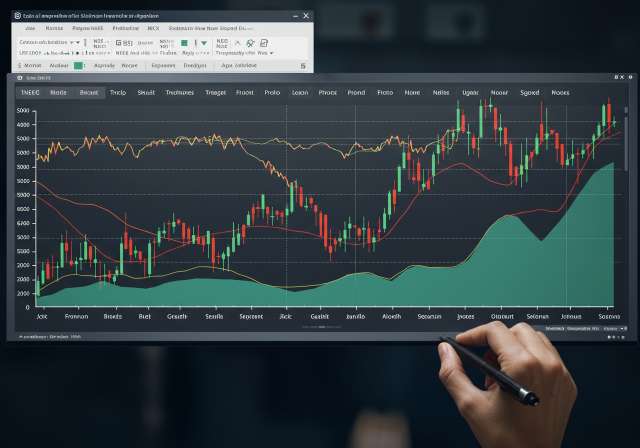
Unveiling the Nifty 50: India’s benchmark index explained. Understand its composition, how it’s calculated, its role in the Indian stock market, and how to inve
Unveiling the Nifty 50: India’s benchmark index explained. Understand its composition, how it’s calculated, its role in the Indian stock market, and how to invest in it. nifty50 IndianStockMarket InvestmentGuide
Decoding the Nifty 50: Your Guide to India’s Premier Index
What is the Nifty 50? A Comprehensive Overview
The Indian stock market landscape is vast and often overwhelming, particularly for new investors. Among the various indices and financial instruments, one name consistently stands out: the Nifty 50. But what exactly is the Nifty 50? Think of it as a snapshot of the Indian economy’s performance, represented by the top 50 companies listed on the National Stock Exchange (NSE). It’s a benchmark index, meaning it’s a key indicator of overall market sentiment and serves as a reference point for portfolio performance.
Essentially, the Nifty 50 tracks the weighted average of the prices of these 50 stocks. A change in the index level reflects the collective movement of these companies’ stock prices. This makes it a crucial tool for investors, financial analysts, and even policymakers to gauge the health and direction of the Indian stock market.
Understanding the Nifty 50’s Composition
The Nifty 50 isn’t a static entity. The constituent companies are periodically reviewed and rebalanced to ensure the index accurately reflects the current market dynamics. This review is conducted by NSE Indices Limited, a subsidiary of the NSE. Several factors are considered during this review, including:
- Market Capitalization: The company’s total value in the market, calculated by multiplying the stock price by the number of outstanding shares.
- Liquidity: How easily the stock can be bought or sold without significantly affecting its price.
- Trading Frequency: How often the stock is traded on the NSE.
- Free-Float Market Capitalization: This considers only the shares available for trading in the market, excluding those held by promoters, government entities, and other locked-in categories.
Changes to the Nifty 50 are announced in advance, allowing investors to adjust their portfolios accordingly. This transparency is vital for maintaining investor confidence and ensuring the index remains a reliable representation of the Indian market.
Sectoral Representation in the Nifty 50
The Nifty 50 is designed to be a diversified index, representing various sectors of the Indian economy. While the specific composition changes over time, key sectors typically represented include:
- Financial Services (Banks, NBFCs)
- Information Technology
- Oil & Gas
- Consumer Goods
- Pharmaceuticals
- Automobile
- Metals
This sectoral diversity helps to mitigate risk. If one sector underperforms, the impact on the overall index is lessened by the performance of other sectors. This makes the Nifty 50 a relatively stable and representative benchmark.
How is the Nifty 50 Calculated?
The Nifty 50 is calculated using the free-float market capitalization weighted method. Let’s break that down:
- Free-Float Market Capitalization: As mentioned earlier, this is the portion of a company’s market capitalization that is readily available for trading.
- Weighting: Each company in the Nifty 50 is assigned a weight based on its free-float market capitalization. Companies with larger free-float market caps have a greater influence on the index’s movement.
- Base Value: The index is calculated relative to a base value and a base market capitalization set on November 3, 1995.
The formula used to calculate the Nifty 50 is:
Index Value = (Current Market Value / Base Market Capital) Base Index Value
Where:
- Current Market Value = Σ (Price Equity IWF) for all 50 companies
- IWF (Investible Weight Factor) = (Free Float Market Capitalization / Market Capitalization)
The NSE provides real-time updates of the Nifty 50 value, allowing investors to track market movements throughout the trading day.
Investing in the Nifty 50: Direct vs. Indirect Routes
Investors have several options for participating in the Nifty 50’s performance. These broadly fall into two categories: direct and indirect investments.
Direct Investment: Replicating the Index
A direct approach involves buying the individual stocks that make up the Nifty 50, in the same proportions as their weightage in the index. While theoretically possible, this is often impractical for most individual investors due to the capital required and the complexity of managing the portfolio.
Indirect Investment: ETFs and Index Funds
A much more accessible and convenient approach is to invest in Exchange Traded Funds (ETFs) or Index Funds that track the Nifty 50. These investment vehicles aim to replicate the performance of the index by holding the same stocks in the same proportions.
- ETFs (Exchange Traded Funds): These are baskets of stocks that trade on the stock exchange like a single stock. Nifty 50 ETFs are a popular choice, offering diversification and liquidity. You can buy and sell them throughout the trading day at market prices.
- Index Funds: These are mutual funds that invest in the same stocks as the Nifty 50, aiming to mirror its performance. Index funds are typically passively managed, meaning the fund manager doesn’t actively try to outperform the index but rather seeks to replicate its returns.
Both ETFs and index funds offer a cost-effective way to gain exposure to the Nifty 50. Expense ratios (the annual fees charged by the fund) are generally lower for these passively managed vehicles compared to actively managed mutual funds.
Benefits of Investing in Nifty 50 Instruments
Investing in Nifty 50 ETFs or Index Funds offers several advantages:
- Diversification: You gain exposure to the top 50 companies in India, spreading your risk across various sectors.
- Low Cost: Expense ratios are typically lower compared to actively managed funds.
- Transparency: You know exactly what stocks are held in the fund and their respective weightages.
- Liquidity: Nifty 50 ETFs are highly liquid, allowing you to buy and sell them easily on the stock exchange.
- Passive Investing: You don’t need to actively manage your portfolio or try to pick individual stocks. This is a hands-off approach suitable for long-term investors.
Nifty 50 vs. Sensex: What’s the Difference?
The Nifty 50 and the Sensex are the two most prominent benchmark indices in India. While both represent the Indian stock market, they differ in their composition and the exchanges they represent.
- Nifty 50: Represents the top 50 companies listed on the National Stock Exchange (NSE).
- Sensex: Represents the top 30 companies listed on the Bombay Stock Exchange (BSE).
Although there are differences, both indices generally move in the same direction, reflecting the overall market sentiment. Investors often use both indices to gauge market performance.
Nifty 50 and Other Investment Avenues: SIP, ELSS, PPF, NPS
The Nifty 50 is just one component of a diversified investment portfolio. It’s important to consider other investment options based on your risk tolerance, financial goals, and investment horizon.
- SIP (Systematic Investment Plan): An SIP is a method of investing a fixed sum of money at regular intervals (e.g., monthly) in a mutual fund or ETF. This allows you to benefit from rupee-cost averaging, where you buy more units when prices are low and fewer units when prices are high. Many investors use SIPs to invest in Nifty 50 index funds or ETFs.
- ELSS (Equity Linked Savings Scheme): These are tax-saving mutual funds that invest predominantly in equity. Investments in ELSS qualify for tax deductions under Section 80C of the Income Tax Act. While ELSS are equity-focused, they may not perfectly track the Nifty 50, as fund managers have discretion in their stock selection.
- PPF (Public Provident Fund): This is a government-backed savings scheme offering a fixed interest rate and tax benefits. It’s a safe and conservative investment option.
- NPS (National Pension System): This is a retirement savings scheme that allows you to invest in a mix of equity, debt, and government securities. It offers tax benefits and is a good option for long-term retirement planning.
A well-rounded investment portfolio typically includes a mix of asset classes, such as equity (Nifty 50 and other stocks), debt (bonds, PPF), and gold. The appropriate allocation depends on your individual circumstances.
Risks Associated with Nifty 50 Investments
While Nifty 50 investments offer diversification, they are not risk-free. Like all equity investments, they are subject to market risk. Factors that can affect the Nifty 50 include:
- Economic Slowdowns: A slowdown in the Indian economy can negatively impact corporate earnings and stock prices.
- Global Events: Global economic events, such as recessions or geopolitical tensions, can also affect the Indian stock market.
- Interest Rate Changes: Changes in interest rates by the Reserve Bank of India (RBI) can influence investor sentiment and market valuations.
- Regulatory Changes: Changes in government regulations or SEBI policies can impact the stock market.
- Sector-Specific Risks: Challenges within specific sectors represented in the Nifty 50 can affect the index’s performance.
It’s important to be aware of these risks and invest according to your risk tolerance. Long-term investing and diversification are key strategies for mitigating risk.
Conclusion: The Nifty 50 as a Cornerstone of Your Investment Strategy
The Nifty 50 is a vital benchmark for the Indian stock market and a valuable tool for investors. Whether you’re a seasoned investor or just starting out, understanding the Nifty 50’s composition, calculation, and investment options is crucial. By investing in Nifty 50 ETFs or Index Funds, you can gain diversified exposure to the Indian economy and potentially achieve your financial goals. Remember to consult with a financial advisor to determine the best investment strategy for your individual needs and risk profile. Always conduct thorough research and understand the risks involved before making any investment decisions. Investing wisely is key to building long-term wealth and securing your financial future.